Moscow Edition. Round Two

Following the success of the previous edition of Know Your Worth: Understanding Marketing and Negotiating for Interpreters, we decided to organize yet another Moscow Edition of the seminar, and so on 23 – 24 September we welcomed the newest members of the Know Your Worth community to our seminar in Moscow.

It was the third time that the seminar was held in a two-day format, and also the third time it was held in Russia, so we were happy to welcome not only new participants, but also some of our alumni, who came to share their most recent experience on the market, and exchange ideas about what they found to have been most useful for them in the months since our previous Moscow Edition.

The format proved once again to be the perfect arrangement for an in-depth discussion of the seminar’s two main subjects: marketing, and negotiating, allowing us to dedicate an entire day to a detailed discussion of each of the topics. We were also able to cover such questions as branding, positioning on the market, prospecting, pricing, pitching, and client relations, and to discuss the many challenges that we, as freelancers, must face on a daily basis.

_20170924_221146 (1)

We like to see our participants brainstorm some of the more challenging cases together, as this often leads to them finding new and exciting solutions to different marketing and negotiating problems. And once again we were not disappointed. On the contrary. We were particularly happy with the way this edition’s participants responded to the discussion, and would like to thank them for their active participation and boundless curiosity, and for bringing so many cases from their own experience to the table. This gave us a unique opportunity to look at an even broader spectrum of case-studies and real-life examples, and made the Q&A sessions even livelier and more fruitful than usual.

_20170924_093108 (1)

We also talked about the mindset necessary for successful marketing, and covered some general principles (as well as a number of highly practical aspects) of pricing and negotiating, all necessary steps in building a more sustainable and much more successful interpreting business. We were also able to devote some time to looking into how the interpreting profession is perceived from the outside, all in order to better understand our potential and existing clients.

e9sz4ohja1y

Traditionally, one of the main features of the seminar is the atmosphere we try to create to encourage our participants to take an active part in the discussion, sharing their personal experience, and exchanging ideas on how best to implement the new tools and techniques in their work. Which is why we would like to take this opportunity to thank the wonderful team at Impact Hub Moscow for helping us create a unique and memorable atmosphere for the seminar, and for making sure that our participants had a wonderful time and nothing to worry about, except getting to the seminar, and getting the most out of it.

In all honesty, we could not have wished for a better place to hold out seminar, and the two days we spent there proved to be not only incredibly useful, but also great fun.

Which, we firmly believe, is the best way to learn.

IMG_20170924_195322_671

We were also very happy to team up with the Cosines International Contest for Simultaneous / Consecutive Interpreters for this edition. It was an honor to help sponsor an event that was aimed at showcasing interpreters’ abilities, as well as at improving interpretation quality.

This slideshow requires JavaScript.

We would also like to take the opportunity to wish you a Happy albeit somewhat Belated International Translation (and Interpreting too!) Day from the Know Your Worth team.

1200px-Pieter_Bruegel_the_Elder_-_The_Tower_of_Babel_(Vienna)_-_Google_Art_Project (1)

If you would like to hold a seminar in your area, please contact us via this website, or by contacting the seminar organizer Tatiana Kaplun at kaplun.tatiana@gmail.com.

Happy International Literacy Day

In honor of the International Literacy Day, we would like to suggest couple of books to help you start to become literate in marketing and negotiating. These talk about the fundamentals for any job, including interpreting, without which you can’t get far.
This book was written at the beginning of the 1990s, before social media took over, but is still useful today. If you are just starting your career and have no idea how to be a freelancer, or how to make a living when you don’t have a salaried position in a company, this book has some very basic but excellent insights.
This book was the first to be published to a wide audience, and started transforming people’s views from negotiating as a battle to negotiating as joint problem solving. That transformation is far from complete…
And for the grandfather of all people skills books, that will begin to show you what has been going on around you without you noticing,
There is a reason this is a perennial best seller.
Many of us may already be skilled enough to know what is in these books, but if you are just starting your journey into the world of freelancing, these books are great!

The business of interpreting: FAQ 6 – How do I become more professional?

You are an interpreter – you help others get their ideas across to people from other cultures. That’s what you signed up for when you decided to become an interpreter, so what’s all this about also acting as travel agent, accountant, marketer, customer relations manager, bill collector and so on? And how do you get all of that done when you barely have enough time to train and practice, prepare for meetings, travel to the assignment, and interpret?

The answer is to become a professional! “Wait a minute,” you ask, “but isn’t that what I am already? I do the job and get paid, doesn’t that make me a professional?” In a manner of speaking, yes. But let me explain what is understood by professional in the business world.

A professional business is one that has documented processes for all routine tasks. When hiring a new person for a job, is it only HR that does the interviewing, or does the manager who needs the position filled have more weight in the decision? Is it enough simply to fire someone when they do something bad, or does the business have to document it and go through a specific procedure? Do the sales people stick to a script that has been proven to work with previous customers? Are certain days reserved for certain things, such as office meetings on Monday mornings or casual dress days on Fridays? All of this builds routines, expectations, cohesion, and a corporate culture that everyone contributes to.

Having processes – or routines – is not a new idea, though it seems to have finally caught on with the general public outside the office too. You can find bestselling books listing the morning routines of successful professionals, business hacks that other successful professionals have used to up their game, life hacks that make it easier to get things done, and so on.

But what is at the core of these books, and what can these ideas teach us when we want to become successful professional interpreters?

Amateur vs Professional

First let’s take a look at non-professionals. Amateurs do something they like, but they don’t have set processes to cover routine eventualities. In other words, they fly by the seat of their pants– “Oh, that sounds like a good idea, I’ll try it,”-– until the next good idea comes along. Everything is constantly new, and needs to be thought out every time it comes up.

This takes up valuable time and, because there are no rules, amateurs give different responses when the same questions come up over time. Amateurs don’t develop a consistent message, which means they are unable to build trust with clients, and have to keep convincing existing clients that they are the best bet.

That all sounds exhausting! Not only are they doing double work with existing clients, but they use up valuable time and brainpower re-thinking things that should already have been set up as routine.

To bring this to the world of interpreting, do you remember when you were just starting out? Every time you heard the chairman of a meeting say something, you had to think of the right way to say it. You struggled with what to call the meeting, what to call the participants, how to open and close a meeting… By the time you became a more experienced interpreter, you realized that there were set phrases that took care of the routine parts of a speech, which meant that your brain could then focus on the less routine parts that require more creativity.

So let’s look at your business world outside interpreting – the part you haven’t necessarily focused on at all and that takes up far too much of your time. Why not create your own routines and processes? Make up your own rule book of steps to deal with matters that come up repeatedly so you don’t have to waste time and brain power reinventing the wheel.

Let me give you an example from interpreting: glossaries.

They are a valuable tool that shortens meeting preparation time. If they are well organized, you remember that in this organization the “Conseil executif” is called the “Executive Board” and in that organization it is the “Executive Council.” You know what term the negotiators used to refer to a particular phenomenon in the previous round, and even if it isn’t exactly the correct word outside of these negotiations, you won’t have to spend time re-explaining everything to both parties to come up with a new term.

So why not apply this lesson to the non-interpreting tasks you are faced with?

Template it!

Templates are enormously useful, in many different walks of life. If all your glossaries have the same format, you don’t have to think about formatting anymore. If you always do the same thing whenever you accept an assignment, you don’t have to waste time and brainpower thinking about what it is you have to do again.

Areas in our business life that could benefit from routines / templates / processes could include customer relationship management (CRM), social media marketing, sales calls, pricing, manning of meetings, billing, travel.

You could simply set up your own routine, such as always calling the same hotel whenever you go to a specific city – thus building a relationship and earning points with their loyalty programs.

You could set up a billing form on your computer, ready to be completed and sent out as soon as the job is over.

You also have a choice of making up your own system or buying something that has already been set up. For example, you could either buy a more or less expensive CRM program, or else make a simple spreadsheet showing the client’s name, any personal details that you have gathered, when your last contact was, and what your next contact should be about.

The same goes for social media marketing – you may buy a program to help you organize your posts, or simply set up a spreadsheet showing when you want to post what kind of message to which platform.

Another example of a template that could help you with prospects and clients is an FAQ page on your website or computer, to be used whenever you get the same questions from different clients. If the answer is already written out, there is no need to rethink what to say.

And, of course, templates are perfect for pricing.If you’ve done the work of figuring out how much you have to charge to make a living, you have your prices and your arguments all ready to go!

The last example, though it is more of a routine than a template, is to fix a day and time to do whatever it is you have to do. There is a reason why books on successful professionals’ routines (now called “life hacks”) are so popular! Every Friday morning at 9:00 am, it’s billing time. Every last weekend of the month, it’s accounting time. Every evening before you go to bed, it’s time to make your To Do list for the next day, or lay out the outfit you will put on in the morning.

Routines that have the force of rules make things easier for you and for your client. There is no decision to be made on routine matters anymore; you can save your brainpower for the unusual assignments that come your way – and add them to your processes for future reference.

After all, who wants to waste time coming up with new ways of handling routine items when we can spend that time more profitably finding new clients to use our processes on!

Originally published on the blog of the International Association of Conference Interpreters (https://aiic.org/site/world/newsEvents/blog)

Teaming up with the Cosines International Contest for Interpreters

We are very pleased to announce that the next Moscow Edition of the Know Your Worth: Understanding Marketing and Negotiating for Interpreters seminar in Moscow on 23-24 September will become an official warm-up event to the Cosines International Contest for Simultaneous / Consecutive Interpreters.

Finalists in the contest will be offered places on the seminar, and Cosines will include our instructor Julia Poger as one of the official judges of the contest the next weekend. If you are in Moscow, please join us for 3 days of lectures, round tables, master classes, and the finale of the contest, from 28 – 30 September!

For more information about the contest, please visit their official website at cosines-pi.ru.

Announcing New Know Your Worth Dates

We are delighted to announce that we will be organizing the next Know Your Worth: Understanding Marketing and Negotiating for Interpreters seminar by Julia Poger in Moscow this coming autumn, with another edition to be held in Paris in the New Year, having received many requests for both those cities.

The next Moscow edition of Know Your Worth: Understanding Marketing and Negotiating for Interpreters will take place on 23 – 24 September 2017, and we will be announcing the dates for Paris shortly.

Please stay tuned, and, if anyone else has more ideas, we will be happy to include them in our future schedule.

You can also visit our Facebook page to check for regular updates.

Happy World Book and Copyright Day

For World Book Day, Know Your Worth would like to suggest a short list of books that give you a snapshot of how the marketing world has changed from the era of Mad Men to today.

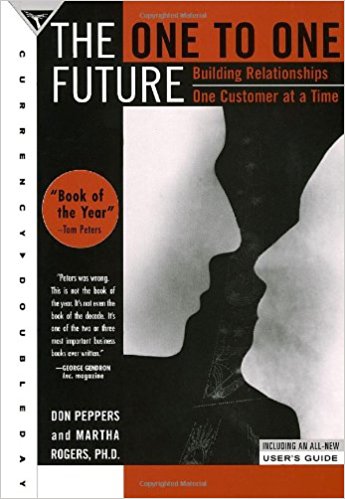
The One to One Future:  Building Relationships One Customer at a Time

by Don Peppers and Martha Rogers

the one to one future

This book started today’s understanding of marketing.

Before this book, companies splashed their advertising everywhere, attempting to attract the maximum number of people to buy their product.  The problem was that once those people had the product, you still had to find more people or else come up with a new product.  But there was no relationship, no loyalty, so the new product needed more marketing to attract the same, and new, people again.

After this book, people understood it was all about the relationship.  If you had a relationship of trust with a good customer, that customer would want to buy whatever you produced (see Apple).  It’s easier to sell more products or services to a converted customer than to sell less to many people you have to convince each and every time.

The Brand You 50 (Reinventing Work): Fifty Ways to Transform Yourself from an ‘Employee’ into a Brand That Shouts Distinction, Commitment, and Passion!

by Tom Peters

brand you

At about the same time as The One to One Future, this book started the entire concept of becoming a personal brand.  It is still relevant today, if a bit hyperactive and enthusiastic.

This is the first book to talk about standing out from the crowd, and making your work into projects that are fun and can help move you forward in your career.  He is the first person to talk about knowledge workers in a way that can be transposed onto interpreting, and that resembles our own work life.

After this book, people started looking at themselves as a company, even if they worked for someone else.

Winning the Professional Services SaleUnconventional Strategies to Reach More Clients, Land Profitable Work, and Maintain Your Sanity

by Michael McLaughlin

win sale

After focusing my attention on individual clients and building the relationship, and treating myself like a brand so I stand out from the pack, this book taught me how to think like the person I am pitching my services to.

This is the first book that I have seen that really shows someone working in the service industry how to think about your approach to the client when you want to pitch a service contract that will last for a day or a year.

It gives information that will help those of us who tender for larger clients, as well as those of us who are simply trying to get the contract to interpret (or organize the interpreting) for a single meeting.


Wishing you a Happy World Book Day,

Julia Poger

The business of interpreting: FAQ 5 – Why do I need to be a brand?

Do you know what people think when they hear your name? Do you consciously try to influence what they think? Or do their impressions form haphazardly while you hope that they will understand your underlying value without any input from you?

One way of intentionally influencing them is to build your personal brand.

What is a brand?

Simply put, a brand is anything that is recognizable, that is known, liked, and trusted because it is consistently the same. Let me give you some examples: McDonald’s, the Subaru Impreza WRX STi, and Bob Dylan. In each case, when you hear one of these names you get an impression, a feeling, an awareness of exactly what you will get when you open the box (sometimes literally).

In McDonald’s case, you know that wherever you are in the world, you will be able to find sustenance at a reasonable price, and in an atmosphere that reflects America – why else do you think it was a popular dating spot in Moscow back when the first restaurant opened? Russians didn’t pick up the hamburgers the way Americans did, and they didn’t see it as a cheap and easy way to feed the kids. It was seen as a way of visiting a small piece of America – so couples went dressed up, and pulled apart the burgers to eat the meat, bread and salad separately, with forks and knives. OK, the audience may have changed today, but the restaurant is still popular with people who want to eat something they already know, like, and trust, and they know they can find this little bit of Americana in Moscow, New York, and Paris.

The Subaru Impreza WRX STi (yes, all the letters mean something) is a driver’s car. In fact, it has long been seen as the supreme driver’s car at a decent price point, and it won many rally championships. Owners flash their headlights at each other when they meet on the road, like members of a private club, and they are immensely picky whom they will flash – if the model doesn’t have a turbo and the gold wheels, you don’t get the flash.

Bob Dylan – well, ’nuff said.

What is a personal brand?

Personal branding started back in 1997, with Tom Peters’ article “The Brand Called You.” Magazines started helping people become brands in a world where the cradle-to-grave job no longer existed or was no longer considered satisfying.

Unlike improving one’s skills, personal branding is away of improving the package those skills are delivered in, so that people see you as distinctive and not as an interchangeable, fungible commodity.

Why are we so different?

Nowadays, all entrepreneurs are brands; we trust the new company because that particular entrepreneur already had a company we all liked. Even employees inside companies are brands, or else they wouldn’t be able to advance. There is even a growing market for personal brand consultants to help you with just these issues.

So why should we interpreters be any different? After all, it is what clients expect. As you already understand, your packaging helps them know and like you and, secondarily, trust what you do even though they don’t understand it at all.

Why do you choose a brand?

Let’s think about this from a different perspective: why do YOU choose a brand? Why have you chosen to drive that car, eat at that restaurant, read that book? Do you make a practice of choosing goods or services with no research, even if it’s only asking your sister what she’s reading today?

Usually you choose to buy goods or services because either you – or someone whom you know, like, and trust – already knows, likes, and trusts – that brand. You choose that author because you have liked what s/he wrote in the past. You choose that restaurant because your Italian friend recommended it as the best Italian restaurant in the city. You bought that book because the bookstore staff highly recommended it. You drive that car because you like and/or admire the tribe of people who also own it, and you want to belong.

If YOU do that, why should your prospective clients do otherwise?

Surprises are not always good

And remember that you are not particularly happy with surprises when you buy and get something other than what you expected. Surprise does not always equal delight.

Subaru found that out when they changed the Impreza. They had originally focused on drivers, so put all the money into the mechanical side and very little into creature comforts: the dashboard looked like cheap plastic instead of feeling more like leather, the seats weren’t very comfortable -just very useful when cornering and driving sideways. When Subaru decided to make the inside more comfortable, sacrificing some of the driver’s features, their sales dropped. The new model alienated their ferociously loyal customer base, and didn’t attract a new demographic because everyone expected the same “driver’s car.” They went back to their roots for the next model.

And for an example from the culture world, just think of the furor that arose when Bob Dylan switched from being a folk music star to playing rock with “Like a Rolling Stone.”

You already know someone

In fact, you most likely already know colleagues with whom you are consistently delighted to work; they would be members of your dream team if you were staffing a meeting. You may even emulate them in your interpreting approach, your booth manners, your customer relations. I am sure they have bad days – they lost a lucrative contract, their kids were sick all night… But would you know it from their demeanor? Their performance in the booth? Their relations with other colleagues or customers?

These colleagues are consistent, so have a personal brand. Why not emulate them? It’s much easier to model your behavior on someone else than to make every little decision all the time. It’s very easy: you just ask yourself “What would [colleague] do?” If you can’t imagine the colleague you are emulating doing something, don’t do it. You become more consistent, people know what to expect, and you begin to understand the concept of a personal brand, if only in the interpreting world.

Become recognizable to your clients

Now take this to the next level. To become a recognizable brand for prospective clients, you need to find reference points that they would understand, from outside the profession.

So now is the time to put on your thinking cap: what brands do you identify with that are not interpreting related? Not brands that you merely like or follow; brands that, when you think about them, really resonate. You want to be that brand. Feel free to pick more than one brand, though if they resonate for different reasons, you should limit your choice to two or three.

Next, think about why the brand/s resonate/s with you. What are the main characteristics that call to you? Think about them, and see if you can bring them into your interpreting career. Create a type of“style guide” that will help you remain consistent with your chosen packaging.

Putting it all together

Now take all of that information and put it together with your interpreting market.

This first isn’t my favorite example, but it is an easy one to show: are you a complete fan of McDonald’s? Do you like their consistency, their delivery of a known product that won’t let you down, anywhere in the world, at a low price point? You could take the consistency as your hallmark, the fact that all your clients will get a known (if not high level) service for not a lot of money. What would McDonald’s do?

Maybe you prefer having more of a niche market like Subaru does with its Impreza model: that keen focus on what the core customer wants, the attention to detail specifically in that area, not being all things to all people. Are these characteristics that could serve you and your interpreting market?What would the Subaru Impreza do?

Even Bob Dylan can serve as a model. He pissed off his loyal fans when he turned to rock, but then proved that he could influence more than just folk and rock, and moved into blues, gospel,rockabilly, garnering new fans and a Nobel Prize along the way, and all with that voice. The characteristic of being ever-changing can work if you are consistent in your “ever-changing-ness.” Or the characteristic of being supremely good at expressing a message in a distinctive voice, or in different styles may be the one to focus on. What would Dylan do?

Now think about what you are selling, and who your client is. Consistently use your new style guide to refine your packaging when selling to prospective clients, and hey presto! You are a brand!

Originally published on the blog of the International Association of Conference Interpreters (https://aiic.org/site/world/newsEvents/blog)

Happy International Women’s Day

On behalf of the entire Know Your Worth community it’s our great pleasure to wish a very happy International Women’s Day to all the wonderful women in this group, who also happen to be amazing interpreters and translators, and truly great people to work with. We hope that you continue to stand out and excel at what you do, enjoy your work and the company of those around you, and find inspiration in your colleagues and surroundings.

Happy International Women’s day, and may you all have a fabulous spring to kick off a great year ahead.

The business of interpreting: FAQ 4 – What exactly am I selling?

Are you clear on what it is you are selling? You know it isn’t interpreting, right? That goes without saying – if you were a plumber, they wouldn’t have called to ask you to quote for aninterpreting job. So they know you sell interpreting skills – but is that what they will buy from you? How will a future client differentiate between you and the other interpreters out there, when s/he believes that you all offer the same thing, that you are all a commodity?

Well, you know for sure you shouldn’t sell quality, because that says nothing. Who would bother selling low quality stereos, or low quality legal services? High quality is the very least that yourclient can and should expect, so it can’t be a benefit or a selling point, and should be more implied than mentioned.

So what are you selling?

If we look to the world of products, one excellent example is Kodak. Eastman Kodak was in thebusiness of making and selling imaging products and image capture technology (cameras and film, for those of us born before pixels). But they weren’t really selling their programs, film or cameras. Kodak was actually selling you feelings and memories – in fact, they were selling you your memories. They were selling you the look on your mother’s face when she watched you get married (finally!); the way you feel when you see palm trees on your favorite beach (and the taste of the ‘pissaladière’ you were eating there); the laughter you can still hear when you look at the photo of your children when they were younger. Nothing to do with image capturing at all – you bought the technology for your memories.

Another good product example is how clothing is sold, or how cigarettes used to be sold. It doesn’t matter what brand you like or buy. What matters is the lifestyle you can see yourself living: theparty you would love to attend, the people you want to spend time with, the places you would go – not so much the clothes you would wear at these parties or the cigarettes you smoked there, though you think it is.

Cars are the same – we all want to drive that fabulously winding road through gorgeous countryside with that beautiful person next to us. We want to be able to pick up at any time, throw the luggage into the back, and take off for parts unknown. We want to belong to the tribe that drives that car, to flash our headlights at each other as we pass on the street, to turn heads as we rumble by …

So what are we selling?

We deal in abstracts, in communicating ideas, which are much more difficult to sell. There is no literal sun shining, no sense of place, nothing to engage your senses at all. The ideas we deal in have to fire the imagination through words alone. The UN has done this – they had to sell cooperation and long term peace just after the most widespread war in history. UNESCO has been able to call people to action through ringing phrases: “Since wars begin in the minds of men, it is in the minds of men that the defences of peace must be constructed.”[i]

Ideas can spark new behaviors, new approaches, new products, new connections. We can gather together and exchange them, firing each other up to do great things. Ideas can get people excited –why else would so many have come out to Washington DC in 1963 to hear the Reverend Martin Luther King Jr. speak? He had a dream that the country could rise “from the dark and desolate valley of segregation to the sunlit path of racial justice.” Winston Churchill spoke of the world moving forward after World War II into “broad sunlit uplands.” Here are ideas expressed with feeling: you can feel the cold of the darkness giving way to the light and warmth of the sunlight. Each of them was selling a big idea, an abstract idea – racial equality or victory – but doing so through the senses of their listeners.

We need to understand exactly what we are selling.

Just as those speakers did, we also have to describe what we are selling in great detail. And yes, it is difficult to say what each of us sells. We all sell the same type of service, but again, it isn’t really interpreting that gets us the job, or the client would stop at the first phone call. It isn’t even “French interpreting,” whatever that may mean to the client, whether it be interpreting from FR>EN,or EN>FR, or FR<>EN, or … It is something intangible, something that belongs solely to you, your specific skill set. After all, what skills I include in my service will be different from what you, my colleague/competitor, include in yours. My unique selling proposition will be different from yours, or else it wouldn’t be unique.

Each of us has to sit down, apply some mental elbow grease, and think what it is we provide that is different. After all, if the prospective client called us, they want us to be their solution. They don’t want to sit through a recital of why you are the best, how you provide high quality services, ad nauseum. Everybody does that, and they wouldn’t have called you if they didn’t already know that part of your package.

So is your special ability that of bringing people together? Can you somehow introduce people to each other as part of your job?

Is your gift being an excellent organizer? Could you somehow include organizing meetings as part of your contract?

Could your contribution be to ensure that the client’s product is marketed in the best possible way to target foreign language-speaking counterparts during the client’s big event?

This specific skill, this intangible something, must somehow be made more tangible for the client to be able to imagine it. Your prospective client is thinking, “How will this service specifically benefit ME?” and doesn’t care about any other thing you might want to tell them about.

If you can bring people together, why not go through your contact list and see who might be good contacts for each other? This will show that you are thinking about the clients and their needs rather than your own. If all they need is the introduction, but no interpretation in this particular interaction, they will remember your selflessness and your ability to see to their needs.

If you are an excellent organizer, why not suggest to your client that you organize a meeting, or a series of telephone calls, to maintain relations with their foreign clients? It would take very little time out of the client’s schedule, as you would deal with the organizing, the note taking, and reminders of the main points of previous interactions. This could make you indispensable to the client in their foreign customer relationship management.

If your prospective client is hiring you to interpret at his big marketing event, and your talent is to really become the speaker, why not let the prospect know that? Explain what specific benefits you can bring to him, his company, and his products or services, and how much better it will be for the speaker’s enthusiasm to target the foreign audience segment in the same way as the local audience.

Yes, we sell communication (note, not ‘high quality interpretation’), possibly even intercultural communication services, but what specific benefits does that communication bring? We need to make what we are selling as real as possible in our client’s imagination. We need to describe specific outcomes that can be seen, felt and touched.

Once a client can imagine using your services, feeling the warmth of the handshake at the end of the negotiation, and deriving a concrete benefit from your service, the sale is made and the job is yours.

————————

[i]Preamble, UNESCO Constitution.

originally published on the blog of the International Association of Conference Interpreters (https://aiic.org/site/world/newsEvents/blog)
Know Your Worth: Moscow Edition

Following the success of the seminar held in Saint Petersburg in September 2016, we decided to organize another Know Your Worth: Understanding Marketing and Negotiation for Interpreters seminar in Russia, and so on 4 – 5 February 2017 we welcomed participants from Russia and the UK to Moscow.

moscow-in-winter

It was the second time that the seminar was held in a two-day format, and, just as with the seminar in Saint Petersburg, the new format proved to be the perfect arrangement to allow for a deep and detailed discussion of each of the seminar’s two main subjects: marketing, and negotiating, as well as such topics as branding, pricing, and client relationships.

This format gave our participants more time to focus on each of the main topics, and to discuss the many challenges that we, as freelancers, must face on a daily basis. It also allowed us to cover more case-studies, looking at real-life examples not only from the interpreting world, but also from other – sometimes surprisingly similar – professions. And this time we were also able to devote more time to looking into how the interpreting profession was perceived from the outside, all in order to better understand our clients.

One of the main features of the seminar is, traditionally, the atmosphere we try to create to encourage our participants to take an active part in the discussion, sharing their personal experience and exchanging ideas on how best to implement the new tools and techniques in their work.

16722521_10212023162358652_6478347180598518773_o

We also like to see our participants brainstorm some of the more challenging cases together, as this often leads to them finding new and exciting solutions to different marketing and negotiating problems. And we were not disappointed.

We will be updating the testimonials section shortly, so that you can read what the participants of the Moscow Edition of Know Your Worth: Understanding Marketing and Negotiating for Interpreters thought of this seminar, and hear directly from them.

In the meantime, you can also check out the event section at the AIIC website, and stay tuned for information about upcoming events.

We would also like take this opportunity to thank the wonderful team at Bulgakov.Space for helping us create a unique and memorable atmosphere for the seminar, and for making sure that our participants had nothing to worry about, except getting to the seminar, and getting the most out of it.

16422400_411104752564574_4179335540564188220_o

And this photo here is just to show you what happens w_20170205_195342hen you put up a sign in a hallway covered from top to bottom in graffiti. With the legendary “Odd” Apartment from Bulgakov’s Master and Margarita just one floor above, it comes as no surprise that the place has become a place of worship and self-expression for thousands of the great writer’s fans of different ages and varying artistic ability.

But graffiti aside, we could not have wished for a better place to hold our seminar. History, art (including some very modern additions), and great style all came together to give us a unique atmosphere, making the two days we spent learning about marketing and negotiating not only incredibly useful, but also great fun.

Which, we firmly believe, is the best way to learn.

16403343_409878409353875_6865588058573467987_o

If you would like to hold a seminar in your area, please contact us via this website, or by contacting the seminar organizer Tatiana Kaplun at kaplun.tatiana@gmail.com.